

Being good at app prioritization means combining the right ways of planning, adaptable ways to manage projects, and the technology that helps. It’s whether understanding what application development requires from the people who will use it, dealing with suggestions for new features well, or making the best use of sophisticated programs that rate software – good prioritization helps apps get made successfully, and it helps businesses do well, and it encourages new ideas. Teams who do this, make certain the way they assign people to work on software, is geared to give users the most benefit.
Understanding System Performance Optimization
Because speed and efficiency are so important in the quick digital world we live in now, how well a computer system does is really crucial. Optimising how a computer works – that is, getting the best performance from it – is about getting jobs done in as little time as possible, saving what it has, and making it work faster, which all makes things better for the person using it. Normally, this means making the software better in areas like how much it can do and how long things take. Throughput is how many jobs get finished in a certain amount of time, and latency is how long any one job takes.
Usually, getting the right balance in these computer performance areas needs carefully looking after what the computer has – especially when you think about how much memory and time a job takes. This shows that making things go quicker could mean using more memory, or the other way around. As an example, keeping data which has already been worked out in a cache can make things quicker, but it needs more memory.
There isn’t one way to make a system work better; it’s often important to change things to fit what the system is for. The best balance between speed and what the computer uses depends a lot on what the program needs. If you understand these trade-offs, you can make the system better so that it does what people want, and does not make it fall over. If you work on making these areas of how well the system works better, it will run more smoothly, be able to do more, and respond to what people ask it to do, much better.
Effective Techniques for Performance Tuning
When it comes to making computer systems run well – and being able to deal with more and more work – it’s really important to find and fix what’s slowing them down. The best way to do this is a regular process of measure, assess, get better, and then learn from what happened. You start by getting figures for how the system is doing, so you can see what parts aren’t very good or are slow. Once you’ve found those bottlenecks in what the system can do, you need to watch things carefully and test to find the real issues causing them.
The work to make things better is mainly about giving priority to improving the code, spreading the work around, and using caches to make things faster. Better code makes things run quicker because it gets rid of work that isn’t needed and makes the logic better. Spreading the work around means making sure jobs are given to all the resources equally, and so the system is more able to deal with demand which goes up and down. Using caches speeds things up by keeping data which is used a lot, so access is faster and there’s less on the servers.
Then, these ways of improving how well the system works are made more exact, with strict tests and watching what happens. Stress tests – making the system work as it would in reality – show if the improvements work when things get difficult. Learning from each step in this cycle helps to make the ways we work better, and so make the system work better overall. This organised process doesn’t just make the system work better now, it also makes it stronger for what might be needed in the future, and it fits in well with systems which watch IT.
The Role of System Performance Monitoring
Tools to analyse system performance are really important for getting the best from computers; they are, in effect, careful watchers which assist in keeping things running properly and well. These give good information by looking at particular measures of how a computer is doing – how much of the CPU is being used, how much RAM is in use, and the overall state of the system. Solutions which look at the hardware – the processors, what the temperature is, and the power units – give reliable information, but do depend a lot on the sensors built into the hardware.
On the other hand, software monitoring tools take a broader view, getting into information at the system level to judge how well software is performing, to spot anything which isn’t right, and to guess at issues which may occur. These IT system monitoring systems work in a range of places, and are flexible, but they do need regular updates and setting up. Keeping an eye on these measurements of performance allows IT teams to put right any slowness before it causes trouble, making sure systems perform at their best.
Even so, questions about privacy arise, and are especially important where multiple people use the same system. It’s very important to put in protections which hide who the users are, and limit how the information is used to what it’s meant to be used for.
Conducting Comprehensive System Performance Analysis
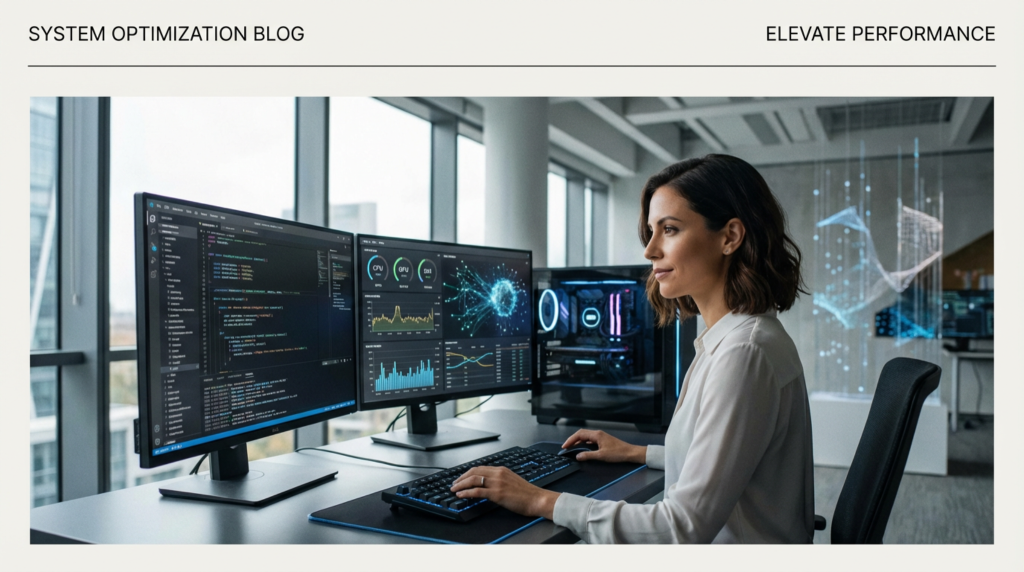
For computer system speed, doing a full check-up using profiling and analyzers is really vital. The methods let programmers look closely at what programs are doing – and find where they’re using up resources. Profiling is collecting detailed information about how long programs take to run and how much memory they use. Such tools as gprof, used with C and C++, and JProfiler for Java, are useful, since they show which functions take the most from the system, and so help developers see what’s using the most resources. Analyzers do even more by giving a bigger view of how the system and programs work together; the Visual Studio Performance Profiler, for example, breaks down CPU and memory use accurately, and so supports work to improve the code.
Performance analyzers that work on different platforms – like Valgrind in Linux – show spots that have been missed, and which cause memory leaks. Python coders can use cProfile as a straightforward way to check how long function calls last. These programs work with several languages, giving developers the chance to make sensible decisions to improve system and program performance. When the parts needing a lot of resources are found, it’s possible to make specific improvements, to get better performance. Really understanding how the system behaves – and using these methods – means that inefficiencies can be removed in a planned way, making for software that is quicker and more reliable.
Strategies for System Performance Improvement
To better computing performance, it’s important to set performance aims that are both obvious and measurable. You can gain a lot of speed by paying attention to individual jobs and how things work as a whole. Begin by creating definite aims for getting better, ones that fit well with what the company is trying to do in general. Doing that guides what people do on their own, and also brings the whole company into the same direction.
Once you’ve done this, find out how well your systems work right now, using computing performance measures. These tests show where you need to make things better, and give you something to check your future work against. When you make changes, do so in a planned way – start with little improvements to performance, so you can watch and learn what’s happening. This kind of repeating process of improving performance makes sure that what you do makes things better, and doesn’t cause big problems.
It’s also very important to have ways of giving people and teams reasons to reach, or go past, the performance aims. Give praise and rewards to the people who are making things better, to encourage them to continue doing what’s good and getting good results. Good, organised plans to make performance better also give people good chances to grow and learn themselves.
These plans need to be made for what each person needs, giving them the help and things they need to reach the aims you’ve already set. All of this together creates a way of always getting better, raising how much work gets done on every level of the company. Taking this sort of active approach doesn’t only make work output go up, but also makes the company better at changing when the world around it changes.
Benchmarking for Performance Evaluation and Improvement
Benchmarking is a key part of judging how well a computer system does, and it’s a good way to check and tell the difference in what hardware and software can do. Understanding the difference between synthetic and application benchmarks is really important in doing this. Synthetic benchmarks make up set situations which copy certain jobs; this lets you find the best that parts such as CPUs, GPUs or drives can do, in the same situation. However, application benchmarks look at performance by means of tasks people actually do, and so give useful information on how systems do in normal use.
Both kinds of benchmark give vital signs of how well a computer works – synthetic tests show the very best that can be done, and application benchmarks show what performance is in the real world. Using both methods together helps find where a system is held back, and shows where hardware and software need to be made better. For instance, if synthetic benchmarks show what a CPU is fully capable of, but application benchmarks are not as good, this could mean software isn’t working as well as it should.
Also, benchmarking helps decisions on how to make a microprocessor, and particularly how to design CPU cores, by finding which designs give the best performance. What they find affects choices on how many cores, how much cache, and how to save power. Using benchmark tests in a careful way enables engineers and developers to make better systems, and to be sure both hardware and software work at their best.
Conclusion:
To get the best out of a computer system, you need a complete way to improve how well it runs. Quite a lot of improvement is possible if you employ methods for system tuning, use tools that keep an eye on the infrastructure, and follow the usual ways of testing performance. Using – and knowing – these techniques to make systems run better makes certain systems remain able to grow, dependable and work well; and this, in the end, lowers expenses and makes people more productive.